

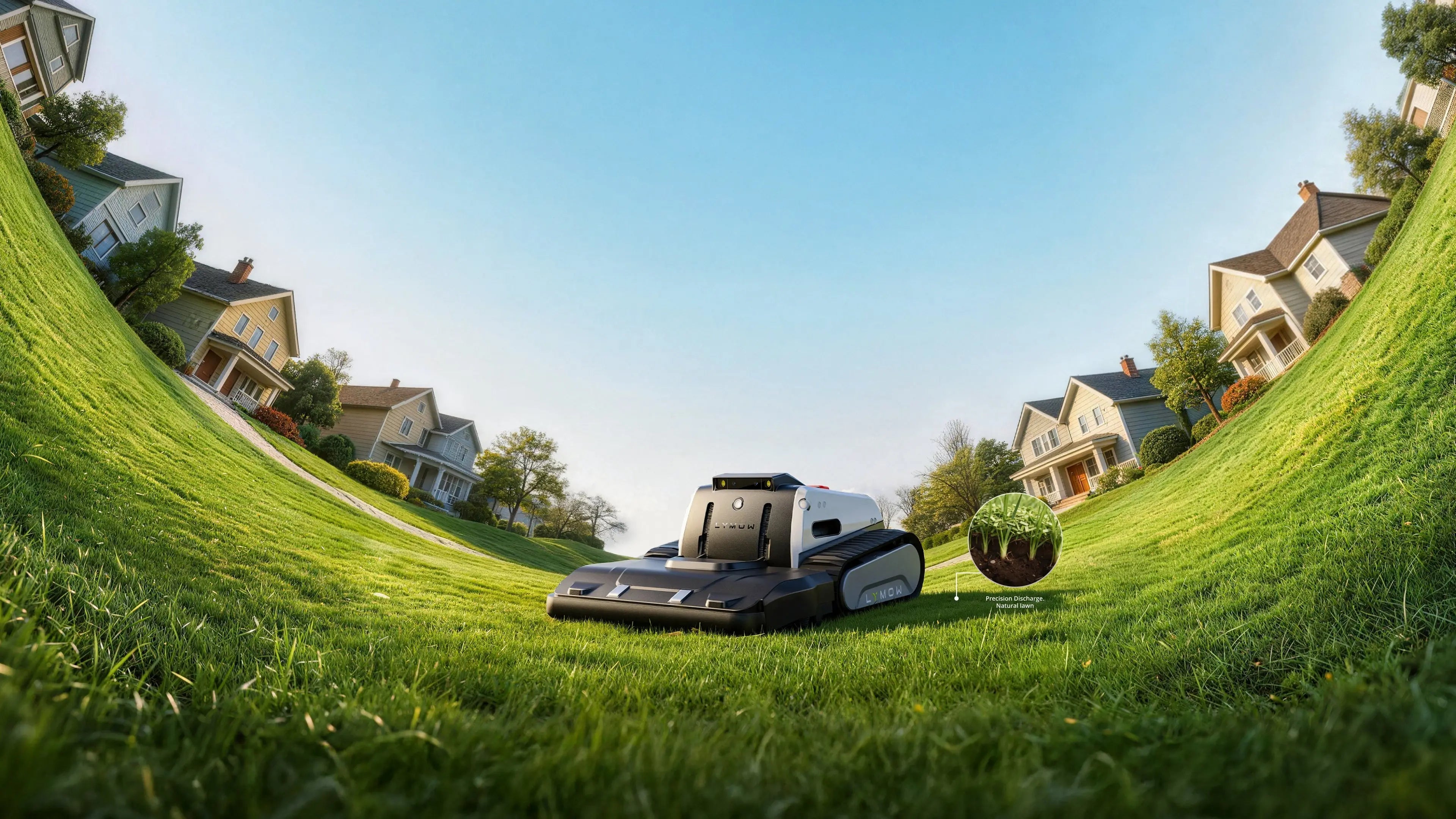
Yes, modern robot mowers can automatically avoid flower beds and trees using advanced navigation systems. As of 2026, leading brands like Lymow combine RTK-VSLAM, visual semantics, and multi-sensor fusion to achieve precise obstacle detection, ensuring your landscaping remains pristine while maintaining a perfectly manicured lawn. The latest models employ binocular vision sensors, ultrasonic detection, and AI processors that recognize various object types—from flower beds and tree trunks to garden statues and sprinklers—eliminating the need for buried boundary wires while delivering centimeter-level accuracy even under dense tree canopy.
How Robot Mowers Detect Obstacles Automatically
Modern robot mowers use three primary detection methods to navigate around flower beds and trees. The most advanced systems combine multiple technologies for superior reliability across all yard conditions.
Binocular AI Vision Systems: The mower utilizes dual cameras with an AI processor to identify and classify obstacles in real time. It creates 3D spatial awareness, distinguishing between temporary obstacles (like a fallen branch) and permanent features (like flower bed borders and tree trunks). It instantly recognizes kids, pets, and garden hoses.
Multi-Sensor Fusion Approaches: The Lymow One Plus goes beyond cameras. It surrounds itself with an invisible safety shield using 5 Ultrasonic Sensors to measure precise distances to objects. For backup, a front bumper with 2 Hall Sensors instantly halts the blades and movement upon any physical impact. The Lymow One Plus features a vertical obstacle-clearing height of 7cm, allowing it to navigate over small garden borders while avoiding taller flower beds and tree bases.
RTK-VSLAM Navigation Technology: This hybrid system ensures reliable positioning even when satellite signals are blocked by dense tree canopies—a scenario where older GPS-only systems would wander blindly into your garden.
Navigation Technologies Comparison
| Navigation Type | Detection Method | Accuracy | Best For | Limitations |
| Wire-Based Systems | Perimeter wire + bump sensors | Reliable within wire | Simple, flat yards | Requires installation; inflexible boundaries |
| GPS-Only Models | RTK-GPS positioning | 1-3cm (open sky) | Large, unobstructed lawns | Signal loss under tree cover |
| Lymow One Plus | RTK-VSLAM + Vision + Ultrasonic | ±1cm precision | Complex gardens with trees/beds | Premium pricing reflects advanced tech |
| LiDAR-Based Models | 3D laser scanning | 3-5cm | Yards with GPS interference | Higher cost; potential blind spots |
| Vision-Only Systems | Camera + AI recognition | High (daylight) | Dynamic obstacles, pets | Reduced performance in low light |
Wire-Free Setup for Complex Landscapes
Virtual Boundary Creation through smartphone apps has revolutionized robot mower setup for yards with multiple flower beds and trees. Users can map their entire property in minutes without digging trenches or burying cables. The Lymow app supports up to 80 zones and can map up to 15 acres (60,000 m²) in total. With a maximum map area of 20,000 m², it enables detailed management of large and complex lawn spaces.
Multi-Zone Management Capabilities allow homeowners to customize mowing patterns for different areas. You can freely choose, customize, and modify GoZones and NoGoZones on the map, including setting different cutting heights and patterns for each zone. Channels connect multiple separate zones, enabling the mower to navigate between areas such as driveways, sidewalks, paths, and flower beds without manual intervention.
Real-Time Obstacle Mapping ensures that temporary objects don’t disrupt the mowing schedule. When the Lymow One Plus encounters movable obstacles like garden tools or children’s toys, it marks those areas and returns to cut them once obstacles are removed. This intelligent behavior prevents incomplete coverage while protecting both your belongings and the mower itself.
Advanced Features for Garden Protection
Intelligent Edge Navigation allows precise trimming around property boundaries and garden beds. The ‘riding edge’ line-follow mode enables the mower to trace the perimeter of flower beds with minimal clearance, ensuring complete grass coverage without damaging plants. The 405mm cutting deck (16 inches) of the Lymow One Plus covers more ground per pass while maintaining maneuverability in tight spaces between landscaping features.
All-Weather Operation with IPX6 waterproof rating means the mower continues working reliably. This durability extends to the tracked tread design, which provides superior traction on slopes up to 45 degrees—essential for yards with terraced flower beds or trees planted on hillsides. The powerful dual blades driven by high-performance brushless motors, delivering a peak power of 1785W, cut through thick grass near tree roots without stalling.
Adaptive Cutting Performance adjusts to varying grass heights and densities. The cutting height range of 1.2-4 inches (30-100mm) accommodates different grass types, with the system automatically adjusting blade speed when encountering resistance. The SK5 High-Carbon Steel blades offer enhanced hardness and wear resistance, maintaining sharp cutting performance even when navigating around obstacles that might dull conventional blades.
Real-World Performance in Complex Yards
Handling Dense Tree Coverage remains a key challenge for GPS-dependent systems, but hybrid navigation solves this limitation. The RTK-VSLAM technology in the Lymow One Plus maintains accurate positioning even when satellite signals are partially blocked by tree canopy. The visual semantics system takes over primary navigation duties in these conditions, using landmark recognition to stay oriented while the GPS provides periodic position corrections.
Slope Navigation Near Landscaping showcases the tracked tread advantage over wheeled designs. When mowing on inclines adjacent to flower beds or around trees planted on hillsides, the continuous track contact prevents slippage that could cause the mower to veer into protected areas. The 100% (45°) slope capability exceeds typical yard requirements, providing a safety margin for reliable operation in challenging terrain.
Setup and Maintenance Considerations
Initial Mapping Process takes approximately 15-20 minutes for a typical residential property. Users guide the mower around the perimeter via smartphone remote control, then designate no-go zones for flower beds, trees, and other permanent obstacles. The system saves this map and refines it over subsequent mowing sessions as it encounters and catalogs additional obstacles.
Ongoing Adjustments require minimal effort thanks to fully editable maps. When you add new flower beds or landscape features, simply update the virtual boundaries through the app—no need to remap the entire area. The system supports remote operation beyond local Bluetooth range through WiFi or 4G connectivity, allowing you to monitor progress and make adjustments from anywhere.
Blade Maintenance involves periodic inspection and replacement to maintain optimal cutting performance. The Lymow One Plus offers versatile cutting options with both straight and swing blade configurations crafted from premium SK5 steel. The enhanced material composition significantly extends blade lifespan compared to standard steel alternatives, reducing maintenance frequency even when operating in yards with numerous obstacles that increase blade contact points.
FAQ
Q: Will a robot mower damage low-lying flowers without raised borders?
A: Advanced models with binocular vision like the Lymow One Plus can detect flower bed edges through 3D spatial awareness and semantic understanding, even without physical borders. For beds flush with the lawn, you can define virtual no-go zones in the app with centimeter-level precision to ensure complete protection.
Q: How do robot mowers handle fallen tree branches?
A: The visual detection system recognizes larger branches as obstacles and navigates around them. Smaller branches may be passed over directly, similar to how traditional mowers handle minor debris. The 7cm vertical obstacle-clearing capability allows the mower to traverse small sticks without damage.
Q: Can I adjust boundaries when I replant flower beds?
A: Yes, the fully editable map system allows instant boundary adjustments through the smartphone app. You can modify the perimeter of specific zones without remapping your entire property, making it easy to accommodate seasonal landscaping changes.
Q: Do these mowers work reliably under dense tree canopy?
A: Hybrid RTK-VSLAM navigation maintains accurate positioning even when GPS signals are partially blocked by trees. The visual semantics system provides primary navigation in these conditions, ensuring reliable operation regardless of overhead coverage.
Protect Your Landscaping Investment
For homeowners with landscaped properties featuring flower beds and mature trees, automatic obstacle avoidance has become essential rather than optional. While budget models offer basic bump sensors and mid-range GPS mowers work in open yards, Lymow’s hybrid navigation system provides the reliability needed for complex gardens. By combining RTK-VSLAM precision, visual semantics for intelligent recognition, and multi-sensor fusion for all-weather performance, Lymow ensures your landscaping investment remains protected while delivering true autonomous mowing convenience. Visit lymow.com to explore models suited for your specific yard layout and experience wire-free lawn care designed for 2026’s demanding standards.


Leave a comment
This site is protected by hCaptcha and the hCaptcha Privacy Policy and Terms of Service apply.